Alexander W. Schindler
Alexander W. Schindler has a master’s degree in Communication and Media from the Berlin University of the Arts. He also worked for the university’s Vilém Flusser Archive. Hailing from a background as a media designer, his research now revolves around media theory, media art, and philosophy. His theoretical and artistic focus is imaging in the post-photographic era.
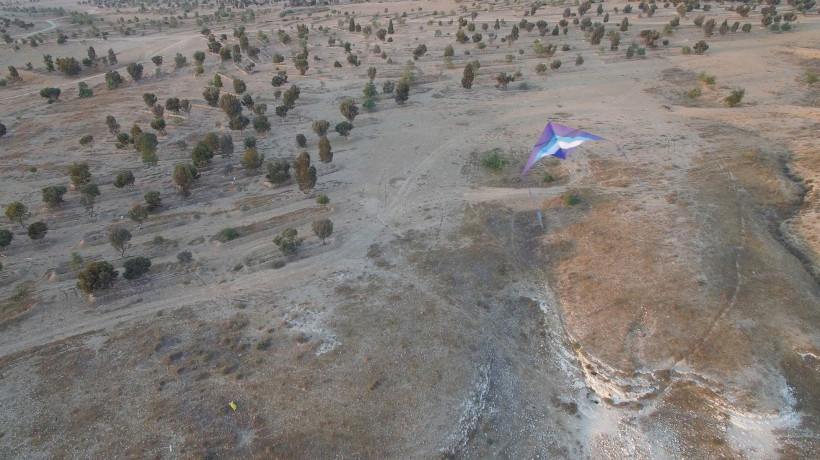
The origins of interpreting technical images not only as two-dimensional projections but also as geometrical descriptions of objects and scenes dates back to the invention of modern photography itself.
Abstract
Bio
References
PDF
Close
This article presents an overview of the history, principles, and current developments in the media technological field of photogrammetry. By chronicling the isomorphic shift taking place in image capturing, we seek to show that photogrammetry has led the way forward in seeing technical images not only as two dimensional projections, but as three-dimensional model-based images. In the mid-nineteenth century, photogrammetry was first used for the documentation of architectural objects and it later became a standard technique in aerial photography. Although its fields of application have become more extensive, photogrammetry’s basic principle hasn’t fundamentally changed: it is still defined as the three- dimensional geometric reconstruction of two-dimensional photographs through the measuring of reference points. With digital technological standards and advances in camera technology, photogrammetric imaging nowadays is intensively used for object recognition in machine vision and robotics. Beside this, photogrammetry is also opening new possibilities for documentation in the fields of investigative arts, this being explored with a discussion on the “Ground Truth” project from Forensic Architecture.
- Keywords: investigative art, machine vision, object recognition, photogrammetry, photography
Alexander W. Schindler has a master’s degree in Communication and Media from the Berlin University of the Arts. He also worked for the university’s Vilém Flusser Archive. Hailing from a background as a media designer, his research now revolves around media theory, media art, and philosophy. His theoretical and artistic focus is imaging in the post-photographic era.
- Albertz, J., 1997. “Information aus Bildern – 100 Jahre Entwicklung”.
- Photogrammetrie und Fernerkundung. VGI – Österreichische Zeitschrift für Vermessung und Geoinformation, 85(4), pp. 251–259. https://doi.org/10.1127/1432-8364/2009/0035
- Caine, A., 2018. Ground Truth. Destruction and Return in Al-’Araqīb. [online] Available online here. [Accessed on 8 Okt. 2018].
- Grimm, A., 1980. Der Ursprung des Wortes Photogrammetrie. In: F. Ackermann et.al. Internationales Archiv für Photogrammetrie. XXIII(B10). Nachtrag, Hamburg, pp. 323–330.
- Hartley, R. I., Mundy, J. L., 1993. The Relationship Between Photogrammetry and Computer Vision. Barret, E.B, McKeown, M., ur. Integrating Photogrammetry Techniques with Scene Analysis and Machine Vision, SPIE 1944, Orlando, 11.–16. April 1993, pp. 92–105. https://doi.org/10.1117/12.155818
- Kraus, K., 2004. Photogrammetrie. Geometrische Informationen aus Photographien und Lasersscanaufnahmen, Band 1, 7. edition. Berlin: de Gruyter. https://doi.org/10.1515/9783110908039
- Luhmann, T., 2003. Nahbereichsphotogrammetrie: Grundlagen, Methoden und Anwendungen. Heidelberg: Wichmann.
- Heipke, C., 2017. Photogrammetrie und Fernerkundung: Handbuch der Geodäsie. Springer Reference Naturwissenschaften.
- Hildebrand, A., 1997. Von der Photographie zum 3D-Modell. Bestimmung computergrascher Beschreibungsattribute für reale 3D-Objekte mittels Analyse von 2D-Rasterbildern. Berlin, Heidelberg: Springer-Verlag.
- Mitchell, W., 1998. The Reconfigured Eye: Visual Truth in the Post-Photographic Era. Cambridge, MA: MIT Press.
- Paglen, T., 2014. Operational Images. E-flux Journal 59, november. [online] Available online here. [Accessed on 8 Okt. 2018].
- Schenk, T., 1999. Digital Photogrammetry. Laurelville: Terra Science.
- Weizman, E., 2012. Forensic Architecture: Notes from Fields and Forums. Documenta (13), 9. 6. 2012 – 16. 9. 2012. Ostfildern: Hatje Cantz Verlag.
- Weizman, E., 2014. Introduction: Forensis. Forensic Architecture (Hg.) Forensis. The Architecture of Public Truth. Berlin: Sternberg Verlag, pp. 9–32.
PDF format files of individual articles are priced at 6.00EUR. If you are subscribed to Membrana Online, you may purchase PDF access to all content on our site: Membrana PDF
(Online subscription is required!)
BUY PDF: A.W. Schindler: Reflections on Photogrammetry – PDF
DOWNLOAD PDF: