Ilija T. Tomanić
Ilija T. Tomanić (born 1974) is Assistant Professor at the Department of Media and Communication Studies at the Faculty of Social Sciences, University of Ljubljana, Slovenia. His primary research interest spans across the field of visual communication, with special focus on the social and political role of photography in contemporary mediated communication. His published articles and book chapters focus on photojournalism, the framing of news, visual representations of otherness and collective identifications. Ilija is the author of Press Photography and Visual Framing of News (2015, University of Ljubljana, Založba FDV). He is currently President of the European Communication Research and Education Association ECREA.
- Vol. 1, no. 1
- 2016
- 02/04/2020
- y
- Interview
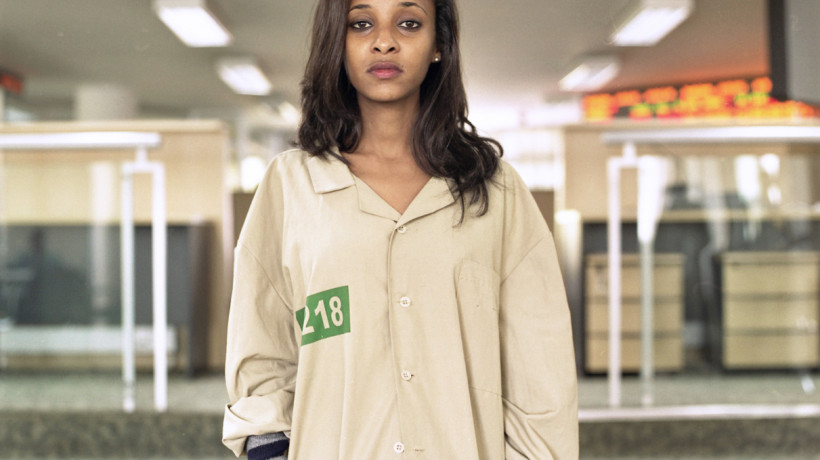
THE MARKET became about exploring the predatory impact of the market through 'thick' cultural description of the nature of its functioning through critical representation of both labour and the environment which so decisively shape our future, but at the same time remain so thoroughly unseen.
Summary
Bio
PDF
Close
Irish photographer Mark Curran presents his on-going project THE MARKET, which is an exploration of the predatory nature of the functioning and condition of global markets. Focusing on financial and commodity exchanges, Curran provides a multi-layered and multimodal investigation of market culture, primarily through interviews and photographic portraits of traders, financial analysts and bankers from Dublin, London, Frankfurt, Addis Ababa and Amsterdam. In the interview, Curran talks about the limitations of using photography to critically represent the intangible and immaterial aspects of the working of the market and its repetitive normalisation of deviance.
- Keywords: deviance, intangible, normalisation, photography, the market
Ilija T. Tomanić (born 1974) is Assistant Professor at the Department of Media and Communication Studies at the Faculty of Social Sciences, University of Ljubljana, Slovenia. His primary research interest spans across the field of visual communication, with special focus on the social and political role of photography in contemporary mediated communication. His published articles and book chapters focus on photojournalism, the framing of news, visual representations of otherness and collective identifications. Ilija is the author of Press Photography and Visual Framing of News (2015, University of Ljubljana, Založba FDV). He is currently President of the European Communication Research and Education Association ECREA.
Mark Curran (born 1964) is an artist researcher & educator who lives & works in Berlin and Dublin. He holds a practice-led PhD from the Dublin Institute of Technology, is Lecturer on the BA (Hons) Photography programme, Institute of Art, Design & Technology (IADT), Dublin and is Visiting Professor on the MA in Visual & Media Anthropology, Freie Universität Berlin. Incorporating multi-media installation informed by ethnographic understandings, since 1998, Curran has undertaken a cycle of long-term research projects, critically addressing the predatory context resulting from the migrations and flows of global capital. These have been extensively published and exhibited, including DePaul Art Museum, Chicago (2010), Xuhui Art Museum, Shanghai (2010), Encontros da Imagem, Braga (2011), Grimmuseum, Berlin (2013) & FORMAT, Derby (2013). Curran has also presented widely, most recently at McGill University, Montreal (2014), the Royal Anthropological Institute, London (2015), the University of Ljubljana (2015) & the University of Bern (2015). Supported by Arts Council of Ireland & curated by Helen Carey, THE MARKET continues the cycle & focuses on the functioning & condition of the global markets. It has been installed at the Gallery of Photography (2013), Belfast Exposed Gallery (2013), Centre Culturel Irlandais, Paris (2014) & Noorderlicht, Netherlands (2015). More recently, in autumn 2015, an extensive installation titled The Economy of Appearances was presented at Limerick City Gallery of Art (LCGA). A full publication of THE MARKET is planned.
PDF format files of individual interviews are priced at 6.00EUR. If you are subscribed to Membrana Online, you may purchase PDF access to all content on our site: Membrana PDF
(Online subscription is required!)
I would be reluctant to treat the monocular gaze of the camera and camouflage as a binary opposition. /.../ If we conceptualise the relation between the two as a duality – as visibility vs. invisibility, as watching machine vs. camouflage – then we run the risk of missing the fact that they are absolutely interlocked together and part of the same economy. I don’t see camouflage as being a response to panopticism, because camouflage is already part of the panoptic system.
Summary
Bio
PDF
Close
John Tagg is one of the most prominent contributors to critical theory and history of photography. In the interview, he talks about the contemporary relationship between (photographic) image and governmentability, on the asymmetrical distribution of power relations that it implies and on the possibilities of resistance to the omnipresent social surveillance. Within the contemporary apparatuses and machineries of surveillance, the image often represents only a nodal point for collection of nonvisual information. As the value of the image within these machineries shifts away from their representational character, the image is increasingly becoming weaponized and is in the final instance, destined to become a trigger rather than visualisation device of the apparatuses of social control. Therefore purely visual strategies of resistance, such as camouflage, are not sufficient to fight against the increasingly automated machineries of social control and changed conditions of governmentability.
- Keywords: camouflage, Foucault, gaze, governmentality, surveillance, visibility, watching machine
Ilija T. Tomanić (born 1974) is Assistant Professor at the Department of Media and Communication Studies at the Faculty of Social Sciences, University of Ljubljana, Slovenia. His primary research interest spans across the field of visual communication, with special focus on the social and political role of photography in contemporary mediated communication. His published articles and book chapters focus on photojournalism, the framing of news, visual representations of otherness and collective identifications. Ilija is the author of Press Photography and Visual Framing of News (2015, University of Ljubljana, Založba FDV). He is currently President of the European Communication Research and Education Association ECREA.
John Tagg (born 1949) is one of the most prominent contemporary contributors to critical theory of photography and art history. He started his academic career in the UK in 1976 and has since 1984 lived and worked in the United States. Tagg wrote a number of essays and influential books on the relationship between photography, institutions and power, such as The Burden of Representation: Essays on Photographies and Histories (1988), Grounds of Dispute: Art History, Cultural Politics and the Discursive Field (1992) and The Disciplinary Frame: Photographic Truths and the Capture of Meaning (2009). He is currently a Distinguished Professor of Art History at Binghamton University, State University of New York.
PDF format files of individual interviews are priced at 6.00EUR. If you are subscribed to Membrana Online, you may purchase PDF access to all content on our site: Membrana PDF
(Online subscription is required!)
Breaking of the convention is an argument for certain kind of authenticity. A grimaced face is not a posed face, therefore it must be an authentic, truly expressive face, the real face.
Summary
Bio
PDF
Close
In the interview, Robert Hariman talks about his latest co-authored book The Public Image: Photography and Civic Spectatorship (University of Chicago Press, 2016), presenting the main argument that they put forward with John Louis Lucaites – that a paradigm shift is needed within the field of photographic theory in order to understand the changing social role of photography in contemporary societies. They argue for a redefinition of the medium’s “burden of representation”, embracing its limitations and treating it as a “small language”, firmly embedded within the notion of the vernacular. This move beyond simple politics of representation, he argues, should however not be apolitical. In fact, the paradigm shift is needed to re-politicise photography and therefore increase its political efficacy in the wake of unsustainability of the dominant neoliberal socio-economic order and the specific catastrophic idea of progress which it promotes.
- Keywords: capitalism, grimace, modernity, photography theory, progress, Robert Hariman
Ilija T. Tomanić (born 1974) is Assistant Professor at the Department of Media and Communication Studies at the Faculty of Social Sciences, University of Ljubljana, Slovenia. His primary research interest spans across the field of visual communication, with special focus on the social and political role of photography in contemporary mediated communication. His published articles and book chapters focus on photojournalism, the framing of news, visual representations of otherness and collective identifications. Ilija is the author of Press Photography and Visual Framing of News (2015, University of Ljubljana, Založba FDV). He is currently President of the European Communication Research and Education Association ECREA.
Robert Hariman (born 1951) is a professor of rhetoric and public culture at the department of communication studies at Northwestern University. He is the author of Political Style: The Artistry of Power (University of Chicago Press, 1995) and two volumes co-authored with John Louis Lucaites: No Caption Needed: Iconic Photographs, Public Culture, and Liberal Democracy (University of Chicago Press, 2007) and The Public Image: Photography and Civic Spectatorship (University of Chicago Press, 2016). His other publications include edited volumes on popular trials, prudence, post-realism, and the texture of political action, as well as journal articles on parody, allegory, banality, and other modes of public address. His work has been translated into French and Chinese. He and Lucaites post occasionally on photojournalism, politics, society, and culture at their blog Nocaptionneeded.com.
PDF format files of individual interviews are priced at 6.00EUR. If you are subscribed to Membrana Online, you may purchase PDF access to all content on our site: Membrana PDF
(Online subscription is required!)