Landscape is understood as a geographical phenomenon, a social construct, and within art history a complex interplay between canon, representation, and artistic depiction. Although landscapes exist independently of human cognition, their meaning is truly realized only in relation to the observer. Over millennia, we have continually, gradually adapted the environments we inhabit, shaping our living spaces in an ongoing dialogue with nature.

This is a complex relationship of mutual concessions. While becoming highly efficient and inventive in adapting the environment to our needs, we persist in maintaining contact with unspoilt nature, incorporating it (in a form that is more or less tamed) into our urban planning. Thereby becoming a complex element that also stimulates artistic creation, the landscape informs art across a broad spectrum of influences, from a simple awe at nature’s power to a modern-day fascination with techno-urban environments. The landscape enters the artistic field directly as an object of reproduction and ever more convincingly as an object of inspiration and a state of mind. Not solely an object of admiration and artistic expression – landscape has become omnipresent, appearing in abstract images, interiors, virtual environments, and, since the onset of the information age, within the digital world as well. It is a phenomenon that we intuitively perceive as both topological and cartographic; human (and animal) nature instinctively records various formulations and juxtapositions of spaces, arranging and adapting them to allow navigation within them. While this skill originally arose from the need to live within nature, it has been transferred to urban and digital spaces. Landscape is therefore something we understand not just rationally, but above all instinctively.
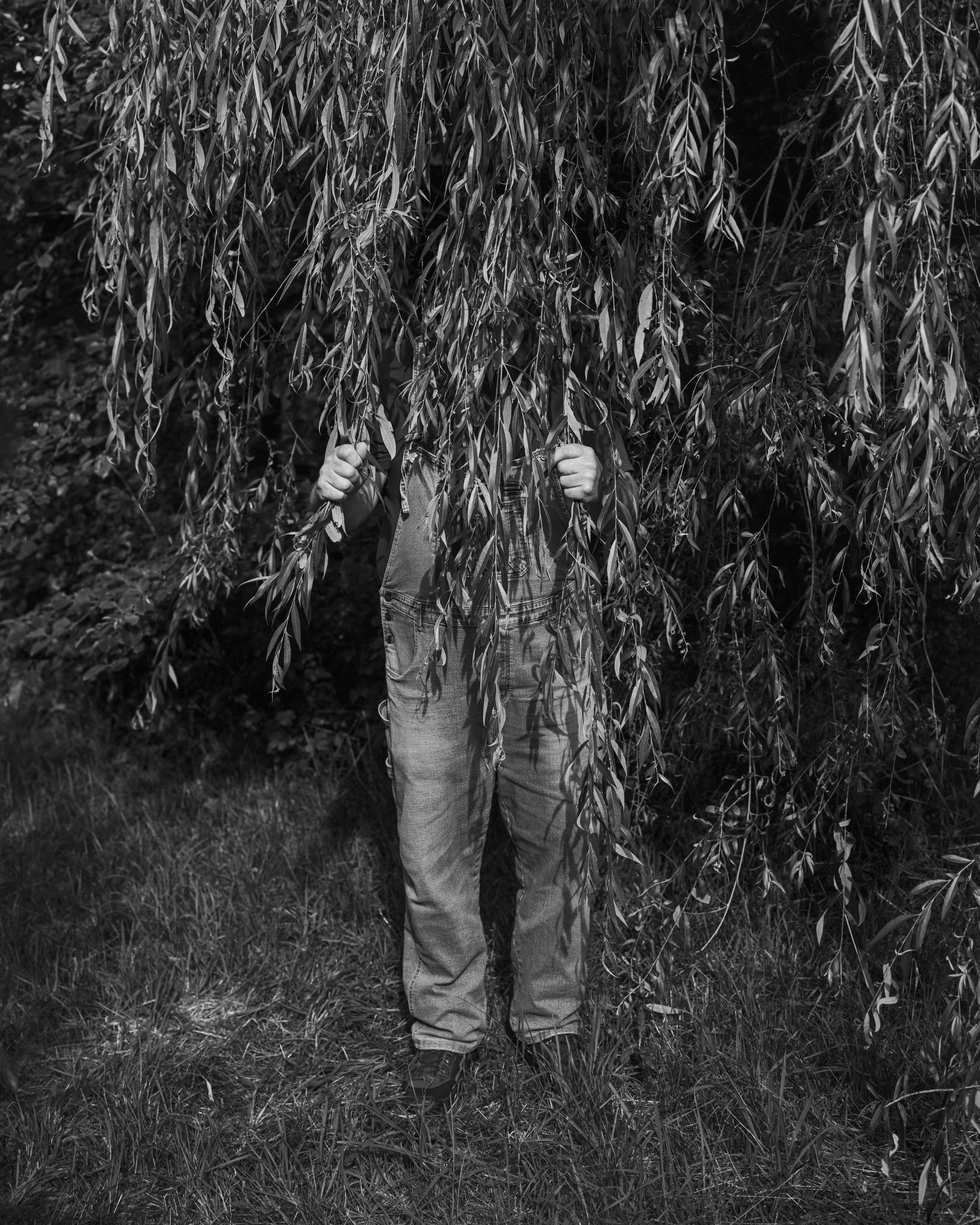
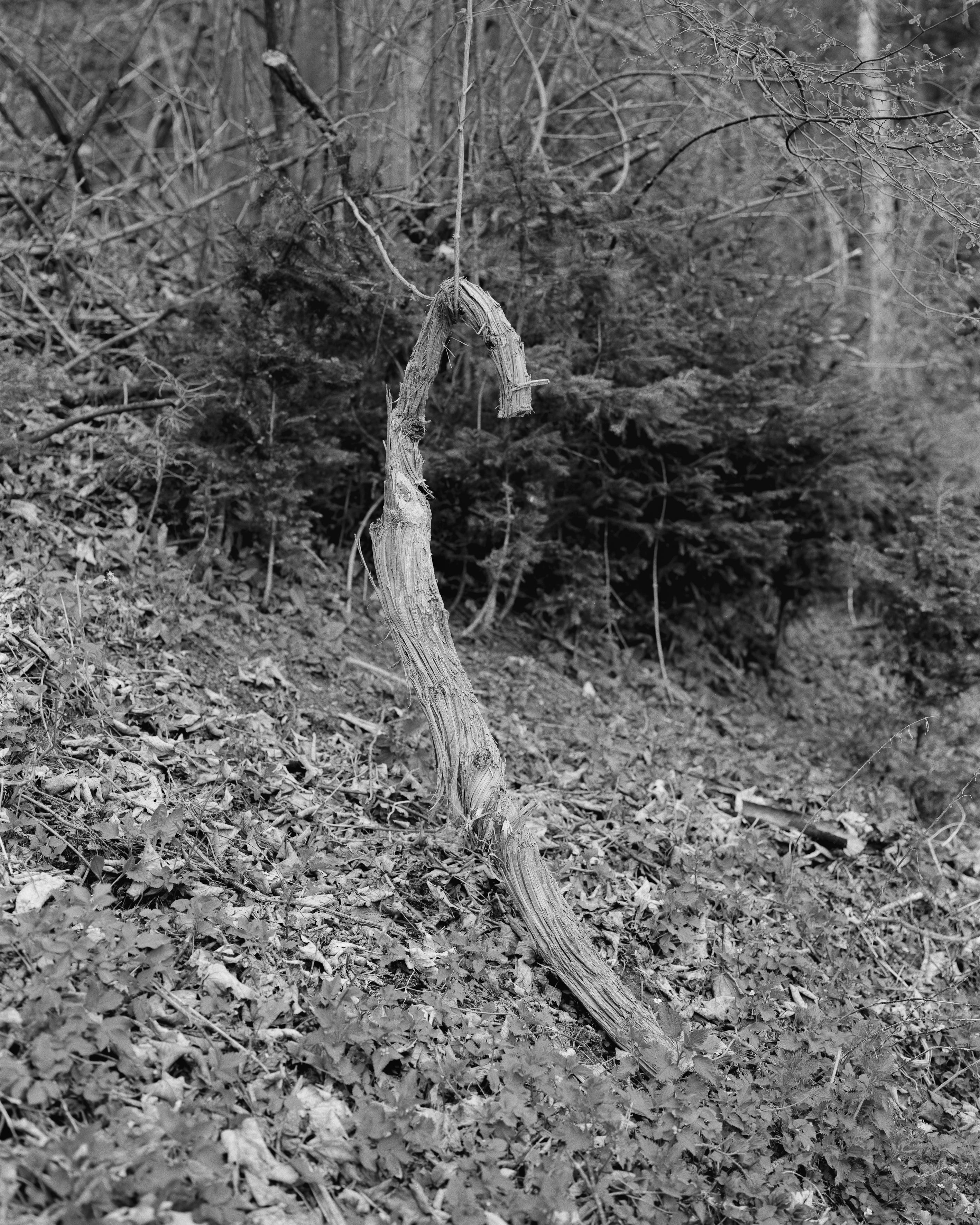
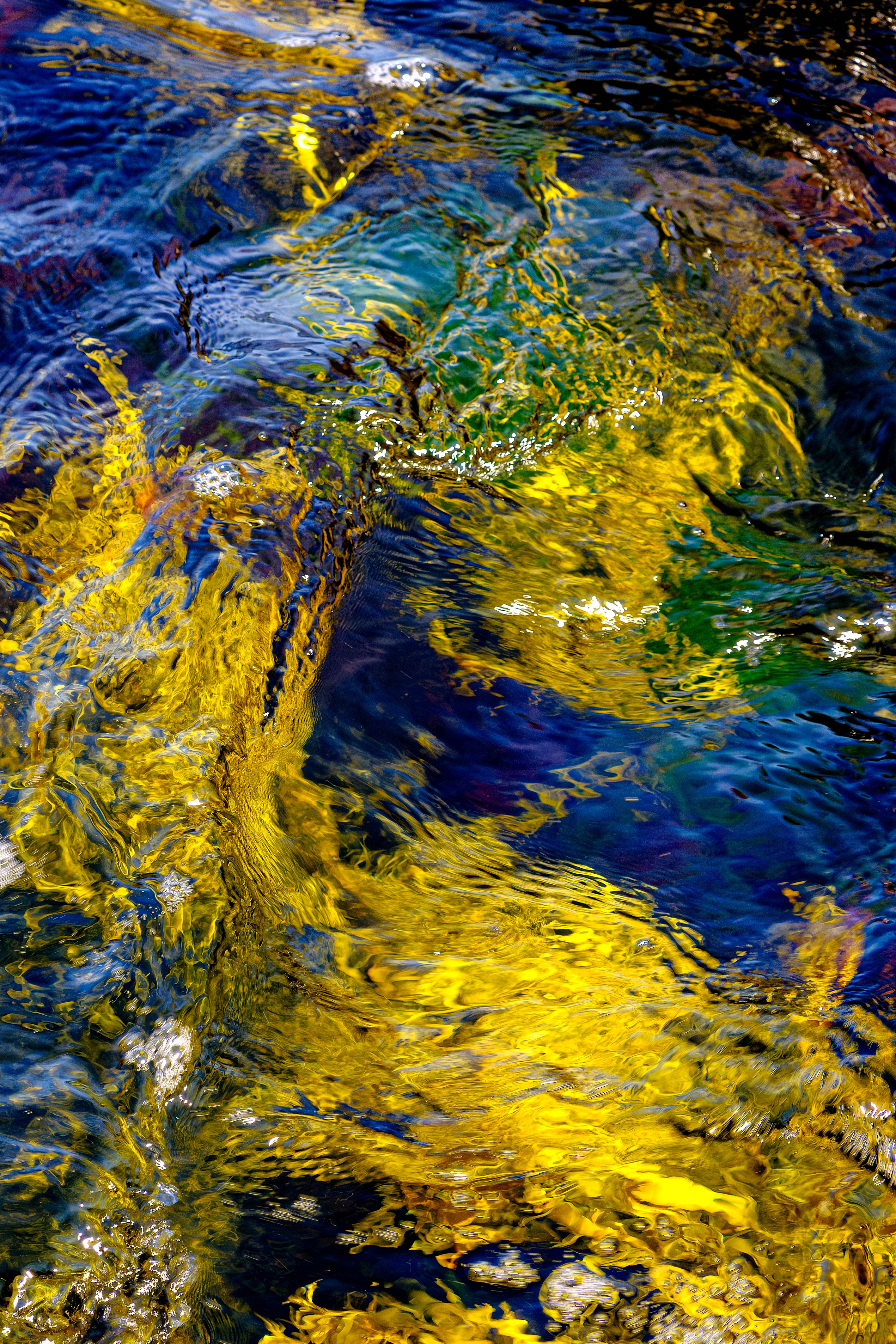
Addressing the landscape from two distinct yet related standpoints, the works on display collectively create a dialogue that opens up new themes and perspectives on the subject. In his project Micheldorf Micheldorf Micheldorf Micheldorf, Elias Holzknecht explores four Austrian towns sharing the same name. His photographs depict both natural and human- made features, as well as people. Static, rigid frames convey the scenes as enduring qualities; as aspects that exist beyond fleeting moments. Despite the transience of what is depicted, the portrayed is typified and morphologically transformed into ephemeral, eternal ideas. While grounded in specificity, the places and people stand as temporary archetypes, slowly integrating with the others. In this way, the fourfold existence of the Micheldorfs acquires a mythical quality, conveying the idea of the place and its inhabitants, while allowing the particularities of each individual iteration to recede. In her project Permeable Landscapes, Lisa Hopf treats the landscape as something in flux – capturing nature, often the sea – alongside other natural elements that convey a sense of eternity and omnipresence. Water serves as a symbol of inconstancy, something that shifts with every subtle change – acting as a mirror of time. The images depict isolated segments of the broader environment, sometimes focusing on a single detail, a stone in the sea or a close-up of the ocean’s waves. Visual surfaces emerge that occasionally resemble abstract paintings – themselves invariably only a fragment of reality.
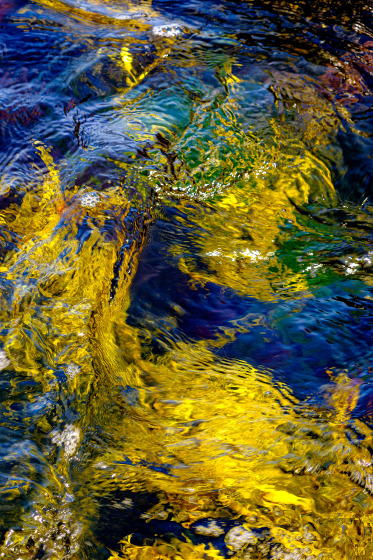
Part of Hopf’s work originated during a transatlantic sailing voyage, her lens a moving gaze across the water’s surface, cast from wave to wave in search of something constant. Other images, taken from land, serve as a counterpoint to the restless and unpredictable sea, anchoring and balancing the series. The boundary between land and sea becomes permeable and blurred. Hopf thus creates new, contemplative landscape images that invite alternative readings and produce a sensory impact. The relationship between humans and the environment is recognized through the act of observation, not as a one-time event, but as a temporal process, first by the artist and then by the viewer.
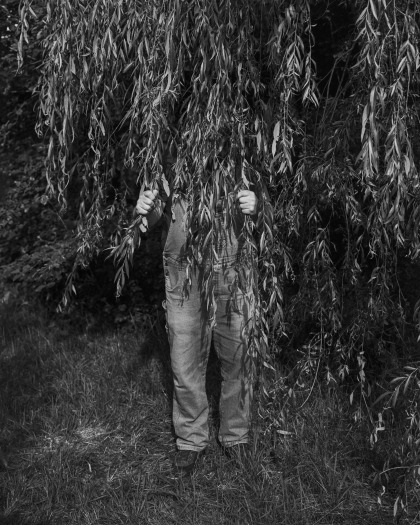
In the gallery space, the two series intertwine and interact through a thoughtful juxtaposition arising from a dialogue between the artists. This presentation constructs a new narrative in which the works complement one another, evoking fresh interpretations and emotions in dialogue. For example, the apposition of blue hues alongside a kissing scene elevates the emotional resonance of the blue while simultaneously rendering the kiss more tender. Thereby transcending a mere collection of geographical and urban features, the landscape emerges as an idea of a new topological form that can exist beyond the real or the virtual. Precisely because of this potential to transcend the local environment, placing Austrian landscapes and distant waves in the heart of Ljubljana feels effortless, as it does not concern strictly Micheldorf or any other specific place, but our relationship to the environment. It concerns what emerges when we observe every last detail of this environment, transforming, contemplating, and processing it both rationally and sensually. Therefore, the exhibition invites viewers to explore the works intuitively, not so much pondering specific content, but allowing themselves to be guided by free association, their feelings, and the aesthetics of the visible.